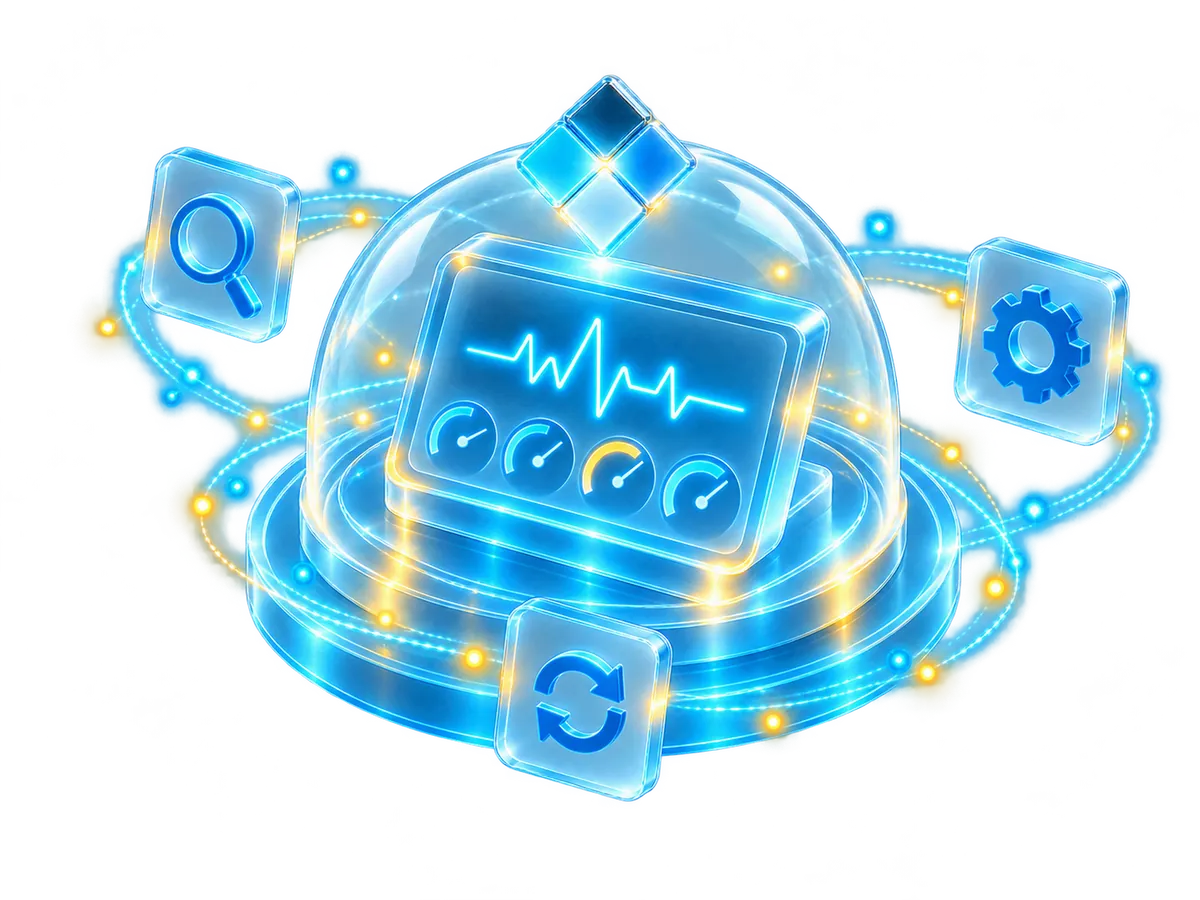
Why managed operations matters
The hard part of AI is not the launch — it is everything after. A system that worked well on day one can quietly degrade as the models behind it change, as usage patterns shift, or as a provider deprecates a model you depend on. Without someone watching, the first sign of trouble is often a user complaint. Managed Operations replaces that with deliberate monitoring and a team you can call.
What's covered
Monitoring
We watch the system in production — quality, cost, latency and failure modes — so problems are caught before users feel them.
Model updates
When a better or more cost-effective model is released, we evaluate it and move your workload across when it makes sense.
Evals before changes
Every change is run through evaluation before it goes live, so an update never quietly makes the system worse.
On-call for production
When something goes wrong in production, there are named people you can reach — not a ticket queue.
How it works
Managed Operations is an ongoing, optional engagement that usually follows a Production AI Build — though we can also take on systems built by others. We agree what "healthy" looks like for your system, put the monitoring and evaluation in place, and run it. You get regular visibility into how the system is performing and what we have changed, and a clear escalation route when it matters.
Who it's for
Businesses running AI in production that depend on it working, but do not want — or do not yet need — a full in-house AI operations function. If your AI touches customers, revenue or day-to-day operations, it needs operating properly.
What it costs
Managed Operations is a recurring engagement scoped to the size, criticality and complexity of the system. We agree the scope and the cost up front. Book a call and we will give you an honest range.
Common questions
What exactly does Managed AI Operations include?
Monitoring with alerting, evaluation runs before any change goes live, model updates when better or better-value options land, cost tracking, and on-call support for production issues.
Can we take operations in-house later?
Yes — Operate is optional and month-to-month in spirit. Everything is documented and built on your stack, so a clean handover to your team is always available.
Does this replace our IT team or MSP?
No — it complements them. We run the AI layer: models, evals, routing and the workflows we built. Your existing IT arrangements keep running everything else.